There is a moment that happens in every dancer's life. The foundational training is done. The competition years are in the rearview. The technique is ingrained in your bones. And then, a question arises: Now what?
For many, the path forward is unclear. The bridge between passionate training and a professional career can feel impossibly wide. This is the gap that The Brea Space was built to fill, and at its heart is the program that started it all: Launch.
In a recent episode of Inside the Space with the Millers, founders Cory and Krista Miller sat down to pull back the curtain on the program. They spoke about the real story of chasing dreams, the unglamorous back-end hustle, and why the most important part of a dancer's training has nothing to do with steps.
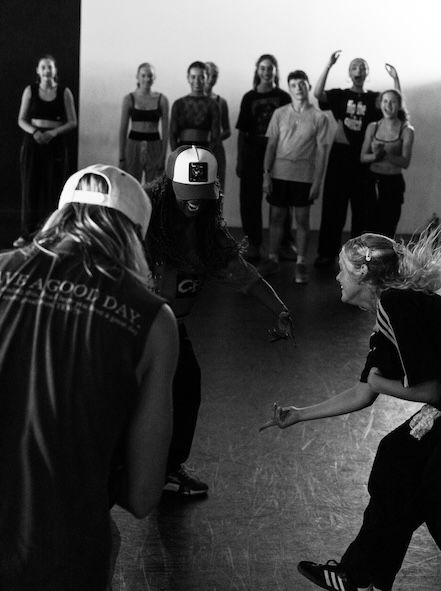
The Launch Training Program didn't begin as a grand vision. It began with a simple, pressing need. "We had six kids," Krista recalls. "We were like, what can we do with these six kids that would be beneficial and helpful for them to maybe get into the business?"
Ten years later, that small group has grown to over eighty, and the program has become a pillar of the Orange County dance community. But the mission remains the same: to prepare dancers for the realities of the commercial dance industry.
For Krista, a veteran dancer and technique teacher, the motivation was deeply personal. She realized that most studios, with their focus on recreational students and competition teams, don't have the capacity to focus on this professional preparation. The Launch Program was designed to be different—a place for dancers who had finished their foundational training and were hungry for more.
When parents first hear about Launch, they often assume it's just a technical program. And while technique is a non-negotiable part of the curriculum, the program's true purpose is far more well-rounded.
"We wanted to find a way to make the training so well-rounded that they could be triple threats," says Krista. The goal is to create a dancer who is not just technically strong, but also versatile, confident, and has a better understanding of how the industry works.
Cory, who brings a wealth of experience from the business side of entertainment, explains the reality of a dancer's career. "Dance is fifty percent of it," he says. "The other fifty percent is: how well do you communicate? Who do you know? Do you have the right outfit? All the training you've done, but can you do that on a consistent basis on a set when it's not just a thirty-second solo?"
This philosophy shapes the Launch curriculum. A typical week is intense and varied, running Monday through Thursday from September to May. Students take classes in ballet, jazz, jazz funk, hip-hop, contemporary, technique, and ballroom. But the schedule also includes classes that most studios don't offer like improv, acting and voice.
One of the most unique aspects of the Launch program is a class that has nothing to do with choreography: journaling. For Krista, it's the most important class of the week.
"They have their coffee and their hair's a little messy, and they're in their slippers, and they get to come in and actually just have real-life lessons talk," she describes. It's a space to discuss mental health, social media pressures, and the feelings of self-doubt that are all too common in the industry. It's where the focus shifts from external skill to internal mastery.
"We talk about self-worth," Krista says. "You're not getting called out in this class, and you feel really down and you're not good enough." These are the conversations that build resilience. The Millers are deepening this component by introducing mentorship groups, ensuring every student has a space to be seen, heard, and held accountable.
Cory adds, "When Launchers first come, one of the biggest things I tell them is, look, it's not about who's the best dancer. It's about the personality, the confidence, the uniqueness, the creativity—that's when all the things start to become more than just good dancing."
This is the transition from student to artist. It's about understanding the why behind the movement, not just the movement itself. It's the difference between a dancer who can do six pirouettes and an artist who makes you feel those six pirouettes.

The Brea Space is more than a studio; it's a dedicated community designed to bridge the gap between training and a professional career. The Launch program is the primary vehicle for this.
The location, in Brea, Orange County, places it squarely in "LA's backyard". This proximity allows the program to bring the industry directly to the students. The program holds "agency weeks" at the studio where agents observe class, and working choreographers come in to teach master classes. Icons like Vincent Paterson have walked through their doors, sharing their energy and expertise.
Students learn the nuances of the professional world: how to slate for a self-tape, how to dress for different audition styles, and how to network. The program hosts evaluation weeks, which function like a progress report, bringing in outside choreographers to give honest feedback in all training styles, including public speaking and on-camera work.
"We do everything we can to give them that entry-level in to what is out there and what is next," Cory explains. "So they can decide."
It's this exposure that leads to real-world opportunities. Each year, 20 to 30 percent of Launch students sign with an agent. But the Millers are quick to point out that this isn't the only measure of success.
One of the most important messages the Millers share with parents and students is a brutally honest one: there are no guarantees.
"I can't guarantee any kind of success," Krista states. "I can guarantee you connections." The rest, she says, is up to the student. "The Launch program works for the kids that show up, commit, communicate, and want it. That's just the truth."
This means showing up with a hungry mindset, being willing to make mistakes, and putting in the work even when it's not glamorous. It means understanding that success in the dance world is a long game built on relationships and resilience, not overnight fame.
The program is a tool, Cory adds, "It's just like a computer... but if you don't have someone behind it typing in what it wants... it's just this great tool that lives there." The students who get the most out of Launch are the ones who actively engage, ask questions, and embrace the journey of self-discovery.
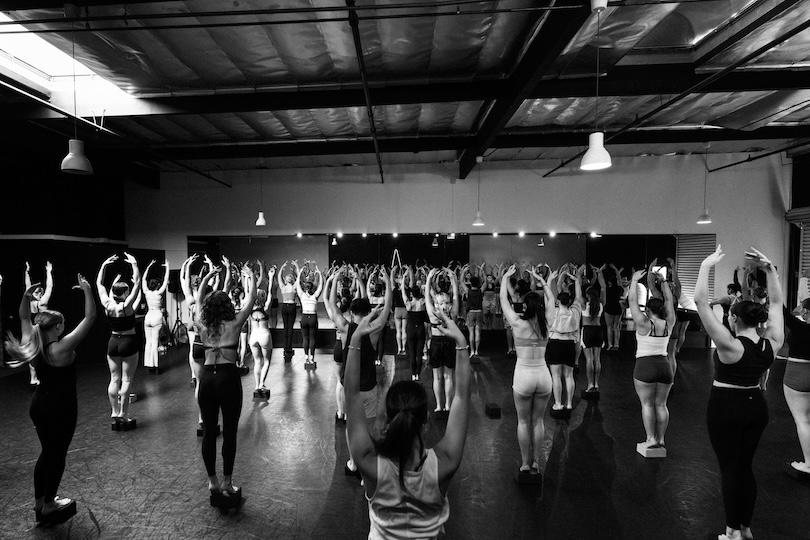
After ten years, the Launch program is not static. It's constantly evolving, just as the industry itself is. The Millers are committed to be cutting edge.
"We continue to grow with the industry," Cory says. "We continue to change and mold it depending on what's happening." They are watching choreographers, agents, and directors make decisions in real-time and adjusting their curriculum accordingly.
For Krista and Cory, the greatest reward is watching their students evolve. "The best part of it is to actually watch the students do the exact same thing and evolve into their own being," Krista reflects.
The Launch program is more than just a training program. It's a launchpad, a bridge, and a community. It's a space where passionate dancers are not just taught how to dance, but how to build a life and a career in an industry that demands resilience, authenticity, and a deep, unshakeable love for the craft.
It's where passion meets purpose, and where the next generation of artists is being built, one honest conversation and one powerful movement at a time.

Cory M. Miller is a creative director, filmmaker, entrepreneur and former professional skater based in Southern California. He is the co-founder of The Brea Space and creator of The Space TV, where he works alongside his wife, Krista Miller, developing and mentoring the next generation of artists.
His career has moved through professional action sports, Hollywood stunt work, filmmaking, photography and creative direction—experiences that now inform his approach to mentorship and artist development.
Cory co-hosts Inside the Space with the Millers with Krista, where they explore creativity, family, careers, personal growth and the realities behind building a life in the entertainment industry.
