Navigating the Digital Space Without Losing Yourself
If you're training for a career in commercial dance, here's a truth that lands somewhere between uncomfortable and unavoidable: your social media presence is now part of your resume.
Not separate from it. Not optional. Part of it.
We've been in this industry long enough to remember when casting required mailing in VHS tapes and 8x10 glossies. When your network lived in a Rolodex, not a followers list. When the only people who saw your work were the ones in the room.
That world no longer exists.
And while the shift has created plenty of noise—comparison spirals, algorithm anxiety, the strange pressure to perform perfection—it's also created something unprecedented: direct access. Casting directors can see your work before you ever walk into an audition room. Choreographers can discover you between classes. The artist in New York who needs a dancer for a tour can find you in Los Angeles without a single phone call.
The question isn't whether to participate. It's whether you're using the tool, or the tool is using you.
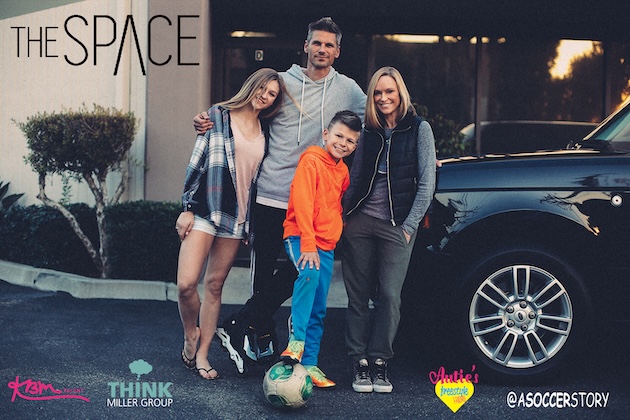
Here's something we tell every dancer who walks through our doors: when a casting director lands on your profile, they're not scrolling deep. They're looking at your first four pinned posts. That's it. That's your introduction.
So what do those four frames say?
If they're all turns and extensions, that says one thing. If they're all bikinis and red solo cups, that says another. If there's no clear throughline—no sense of who you are as an artist or human—that says the most dangerous thing of all: I haven't figured it out yet.
Be intentional about what you lead with. Your pinned posts should answer three questions instantly:
What do you do?
Who are you?
Why should someone want to work with you?
The dance world is small. Reputations travel fast. And your profile is often the first impression before anyone ever meets you in person.
But here's where it gets nuanced: casting directors aren't just hiring a skill set. They're hiring a human being.
The dancer who only posts performance footage? One-dimensional. The artist who shares their work and their life—the hike, the dog, the imperfect kitchen moment, the genuine laugh? That's someone a choreographer wants to spend twelve hours a day with.
You are allowed to be a person. In fact, you're required to be. The industry doesn't need more robots who can execute combinations. It needs artists who can collaborate, connect, and bring energy into a room.
The key is balance. Your feed should tell a story—your story—not a highlight reel designed to impress strangers who don't know you.
We do an exercise with our students sometimes. Open your phone. Check your screen time stats. Look at how many hours you spent scrolling this week.
Then do the math.
If you took that same amount of time and redirected it toward creating—filming a combo, editing a reel, building your content—where would you be in six months?
The iPhone in your pocket is more powerful than any camera we had access to twenty years ago. 4K. Slow-motion. Editing tools that would have made professionals weep. You have a production studio in your hand. The question isn't whether you're good enough to post—it's whether you're willing to show up and create.
Inspiration is fuel, not destination. Watch. Learn. Absorb. Then close the app and make something.
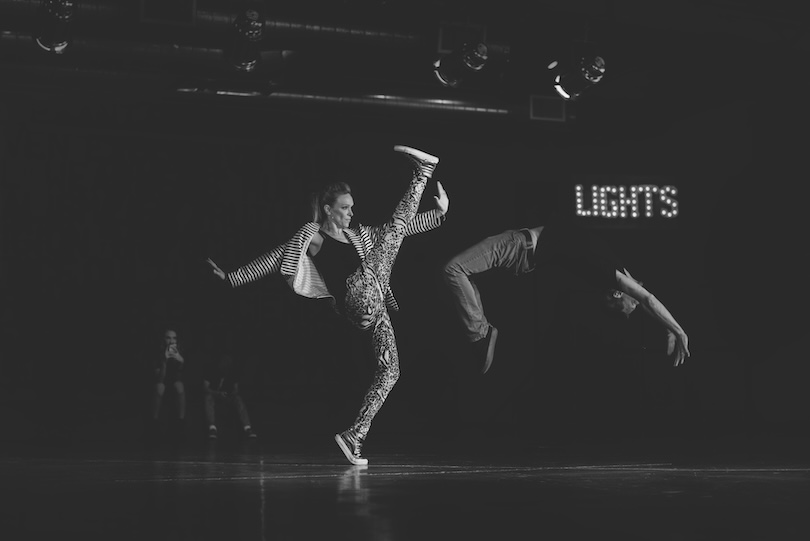
Twenty beautiful comments. One that says you suck. Which one lives in your head rent-free?
We've watched this play out with our own kids, our students, and artists across the industry. The weight of negative feedback—especially from anonymous accounts with no stake in your journey—can outweigh a hundred affirmations. It's human nature. And it will eat you alive if you let it.
Here's our rule, developed over fifteen years in this space: block and delete.
Not because feedback isn't valuable. Not because you can't handle critique. But because cruelty disguised as honesty, delivered by someone who's never trained a day in their life, doesn't deserve space in your mind.
Check the profile. Nine times out of ten, it's someone with no investment in your growth and no right to your attention. Let them go.
We need to say something that might ruffle feathers: airing your dirty laundry publicly rarely serves you.
We've watched dancers call out choreographers on Stories. We've seen studios engage in passive-aggressive warfare through posts. We've witnessed artists burn bridges they didn't even know they were standing on—all for the instant gratification of being "right" in front of an audience.
Here's what the most successful people in this industry understand: how you handle conflict tells everyone watching exactly who you are.
The professional response isn't always the satisfying one. It's the phone call instead of the post. The email instead of the expose. The private conversation that preserves dignity on both sides.
NDAs exist for a reason in the professional world. But even without one, consider this: the internet remembers. And the people hiring for your dream job are watching how you navigate the hard moments.
We've been at this long enough to watch the game change multiple times. And if there's one throughline we've observed, it's this: comparison is the thief of everything.
You see the dancer who booked the job you wanted. You watch the studio across town post their tenth showcase highlight. You scroll past the artist whose follower count doubled overnight. And something inside you tightens.
We get it. We've felt it. Every artist who's ever put work into the world has felt it.
But here's what we've learned: that energy is a compass pointing toward what you want, not a verdict on what you lack.
When envy rises, ask a better question: What can I create in response? Not to compete. To express. To build. To become more fully yourself.
The industry has room for all of it. The only person you're racing is who you were yesterday.

Some weeks we post daily. Some weeks we disappear. Not because we've fallen off, but because we're living—and that's the point.
If you need a break, take it. If the algorithm is stressing you out, step away. If comparing yourself to others is stealing your joy, unfollow, mute, or simply close the app.
You are not your numbers. You are not your comments. You are not the version of yourself that lives in a four-by-four square.
You're the artist showing up in class. The human building relationships. The person who dances not for the 'gram, but because something inside you requires it.
The content being created every twenty-four hours right now exceeds what was created in the entire decade of the 1970s. The noise is infinite. What cuts through isn't perfection—it's presence. It's the work made by someone who's actually living a life worth watching.
Use social media as what it is: a tool. A resume. A connection point. A creative outlet.
But never let it become the reason you create, or the measure of your worth.
Be intentional. Be safe. Be human.
And then get back in the studio and do the work that actually matters.
You can watch the full video discussion on episode 8 of Inside the Space.
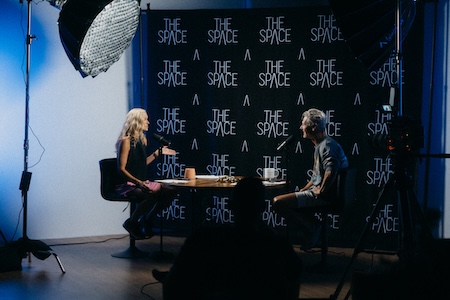
The Brea Space is an elite commercial dance training facility in Orange County, California, founded by industry veterans Cory and Krista. Through programs like Launch Training Program and The ACADEMY, we bridge the gap between passionate training and professional reality. Because the goal isn't just to dance—it's to build a career that lasts.

Cory M. Miller is a creative director, filmmaker, entrepreneur and former professional skater based in Southern California. He is the co-founder of The Brea Space and creator of The Space TV, where he works alongside his wife, Krista Miller, developing and mentoring the next generation of artists.
His career has moved through professional action sports, Hollywood stunt work, filmmaking, photography and creative direction—experiences that now inform his approach to mentorship and artist development.
Cory co-hosts Inside the Space with the Millers with Krista, where they explore creativity, family, careers, personal growth and the realities behind building a life in the entertainment industry.
