After years in a competition studio, you start asking a new question: What comes next? You know you love this craft — the hours, the sweat, the music, the way dance has shaped who you are.
But the industry is different than the mirror.
The camera is closer. The audition room is quieter. The choreographer is watching how you listen, how you adapt, how you carry yourself when the combination changes and the pressure rises. Suddenly the space between the dancer you train to be and the professional you need to be feels real.
This is where preparation becomes more than steps.
Great dancers don’t just execute movement — they communicate, collaborate, and create moments that feel honest on set, on stage, and on screen. Technique is essential, but it’s only the beginning. The commercial dance world asks for more: confidence under pressure, emotional availability, versatility, professionalism, and the ability to tell a story with your presence, not just your feet.
Training for this industry means learning how to walk into any room — an audition, a rehearsal, a job — and understand what’s being asked before a word is spoken. It’s learning how to take direction, protect your artistry, work as part of a team, and translate preparation into opportunity.
This is the bridge from studio to spotlight.
From technique to career.
From dancer to working artist.
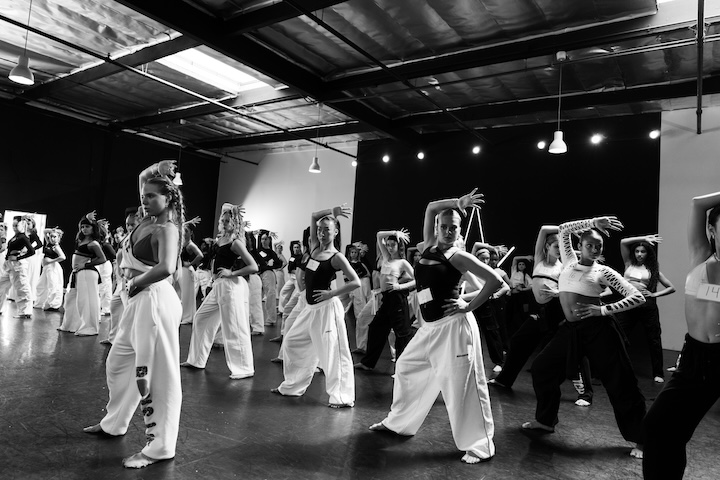
Presence isn’t a magical trait a few dancers are born with — it’s a craft you can learn, build, and strengthen. It lives in small, intentional choices that eventually feel effortless to the audience, the choreographer, and the camera. What reads as “it factor” is really a collection of skills: awareness, confidence, storytelling, and professionalism working together in real time.
At The Space, we teach presence the same way we teach technique — by breaking it into pieces you can understand, practice, and own.
Where you look tells the audience where to feel.
In a commercial audition, your eyes introduce you before your feet ever move.
On camera, your gaze decides whether the moment feels honest or staged.
On set, your focus shows a director that you understand the story, not just the steps.
Eyeline is more than “spotting.” It’s learning how to direct energy, invite connection, and stay grounded when the room gets loud or the pressure rises.
We train dancers to use their eyes with intention — to communicate confidence, curiosity, power, or vulnerability depending on what the job requires.
In a studio, energy bounces off familiar walls.
In the industry, the space changes every day — a casting room, a soundstage, a music video set, a live audience, or a lens two feet from your face.
Professional dancers learn how to calibrate their volume.
Sometimes the job asks for explosive, arena-sized energy.
Other times the camera needs honesty, detail, and stillness.
We teach dancers how to project from their center — not by “doing more,” but by being more specific. Real range means knowing how to fill a room without overselling, how to pull the audience in with subtlety, and how to adjust instantly when a choreographer says, “smaller… more real… try it like you’re not performing.”
That control is what separates a trained dancer from a working artist.
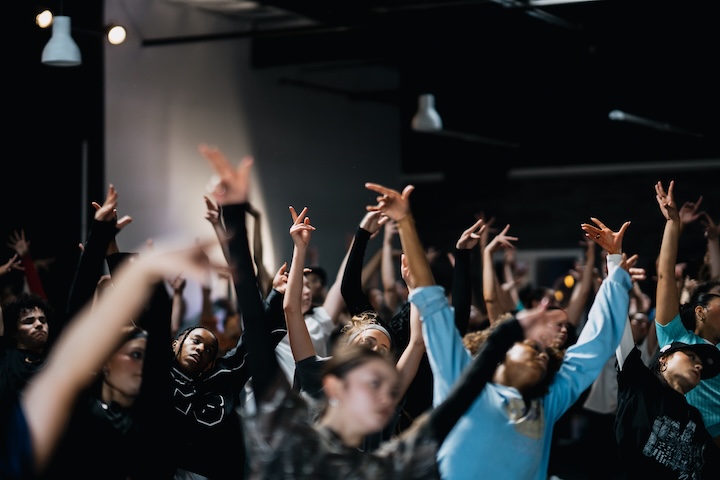
The commercial industry isn’t hiring human metronomes.
It’s hiring personalities, storytellers, and collaborators.
True professionalism means you’re not just dancing the choreography — you’re living inside it.
Every job asks a question:
We train dancers to make creative choices instead of waiting for permission — to understand tone, intention, and style so they can walk into any audition or set and feel like a contributor, not just a body in counts.
The biggest challenge isn’t the combo — it’s the moment before it.
The quiet hallway.
The casting sheet with your number.
The camera turning on.
Careers are built in how you handle those seconds.
We don’t try to remove nerves — we teach dancers how to work with them. Confidence in the industry is a skill, practiced the same way as turns or grooves.
The biggest hurdle in performance is often internal. The fear of judgment, the pressure to be perfect, the adrenaline surge that can either fuel you or freeze you—this is the battleground where careers are forged. Overcoming stage fright isn’t about eliminating fear; it’s about learning to harness its energy. This is a crucial component of elite young dancer training, focusing on mental resilience as much as physical skill.
Effective dance audition preparation involves building a mental toolkit to command your nervous system:
Breath as Your Reset
When pressure rises, the body speeds up.
Simple, repeatable breath patterns help dancers stay present instead of reactive. Learning how to ground your nervous system means you can think clearly, listen to direction, and stay connected to the music even when the room feels intense.
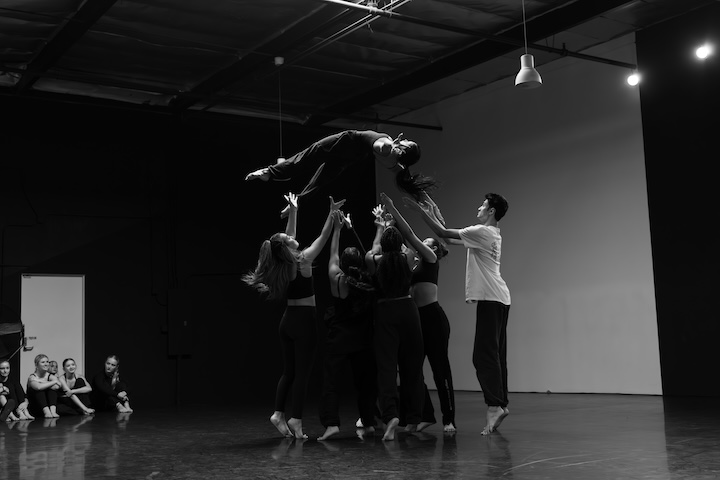
The mind learns through imagination as much as repetition.
We guide dancers to picture auditions, cameras, and callbacks with clarity — seeing themselves adapt, succeed, and stay calm. By the time the real moment arrives, it already feels familiar.
Working dancers rely on small routines that travel with them — a playlist, a stretch sequence, a quiet intention — something that says, I know how to show up. These habits create consistency in an unpredictable industry.
We teach our dancers to change the story they tell themselves: not “What if I mess up?” but “What do I get to bring today?”
Every audition, class, and job is a chance to share something only you can. When you see dance as an offering instead of a proving ground, the weight lifts — confidence grows, creativity opens, and excitement replaces fear.
You can’t learn the commercial dance industry in isolation.
The journey from passionate student to working artist requires more than great classes — it requires a community, real experiences, and an environment built to mirror the professional world.
A true pre-professional program is an ecosystem:
At The Brea Space, programs like The ACADEMY and Launch Training Program are designed around this belief. We don’t just teach choreography — we prepare artists for the rooms they will actually walk into. Every part of training reflects the realities of auditions, sets, agencies, and creative teams.
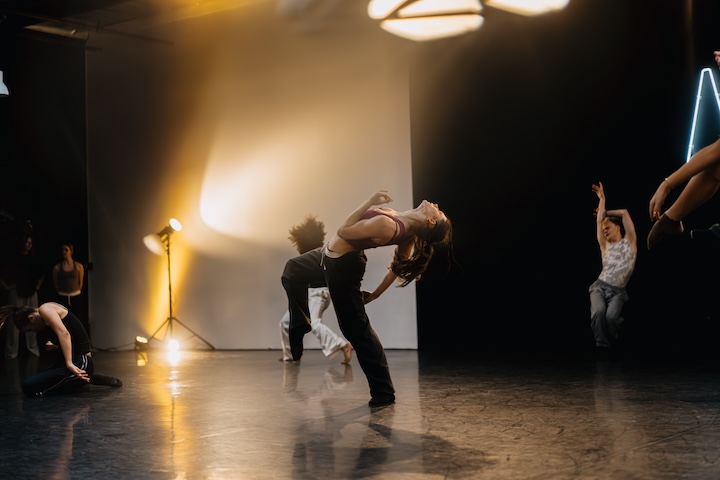
Auditions are their own skill.
The numbers, the quick learning, the cuts, the pressure to adapt — none of it feels natural at first.
We recreate that environment so dancers can practice more than steps:
Resilience grows when experience becomes familiar — and when you’re not facing it alone.
Stage and screen speak different languages.
We teach dancers how to translate their movement for cameras, angles, close-ups, and brands — how to be honest instead of big, specific instead of loud.
Equally important is learning to work with a team: directors, choreographers, cinematographers, and fellow dancers who all shape the final story.
Our faculty are working professionals who understand today’s industry — not the industry from ten years ago. Their feedback connects technique to opportunity, helping dancers understand:
Careers in commercial dance are built on relationships.
In our programs, dancers learn how to:
You are surrounded by peers who challenge you, lift you, and dream just as big — and that environment changes everything.
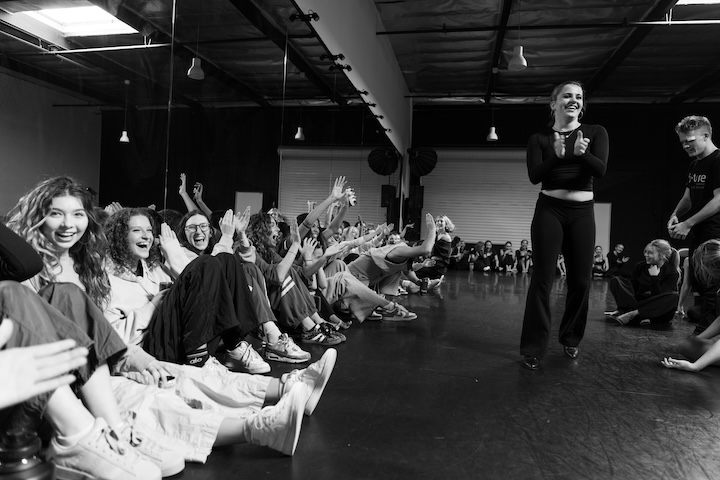
The path from studio to industry is deliberate.
It’s built on technique, yes — but also on mindset, adaptability, collaboration, and the courage to show up as yourself.
Your body is your instrument.
Your presence is your power.
Your community is your foundation.
When training reflects the real world, a dancer becomes more than someone who executes steps — they become an artist ready for a career.
Your potential is electric.

Cory M. Miller is a creative director, filmmaker, entrepreneur and former professional skater based in Southern California. He is the co-founder of The Brea Space and creator of The Space TV, where he works alongside his wife, Krista Miller, developing and mentoring the next generation of artists.
His career has moved through professional action sports, Hollywood stunt work, filmmaking, photography and creative direction—experiences that now inform his approach to mentorship and artist development.
Cory co-hosts Inside the Space with the Millers with Krista, where they explore creativity, family, careers, personal growth and the realities behind building a life in the entertainment industry.
