At The Brea Space, we talk a lot about the journey,the work behind the moments people see, the uncertainty that comes with choosing a creative life, and the experiences that shape an artist long before anyone calls them successful.
In a recent episode of Inside the Space with the Millers, Cory Miller shared his own version of that journey.
It isn’t a traditional one.
Professional rollerblading led to stunt work. Stunt work led to cameras. Cameras led to filmmaking and creative direction. Family changed his definition of success. And eventually, all of those experiences found their way into the philosophy behind The Brea Space.
Cory’s story isn’t a blueprint for how someone else should build a career. If anything, it suggests there may not be a blueprint at all.
Sometimes the thing that looks like a detour becomes the path.
Growing up, success often seemed neatly packaged: a steady job, a house, a family, and a predictable path forward.
Cory’s life didn’t look anything like that.
“I felt the pressure from society to live a certain way,” he remembers of his early years as a professional skater. “There was this idea of what a successful life was supposed to look like—a traditional job, stability, a clear path forward. And the life I was choosing didn’t really fit into that.”
Even while traveling the world and building a career doing something he loved, there was uncertainty. Contracts came year to year. An athlete’s career could end quickly. And there was always the question of what came next.
But underneath that uncertainty was a bigger question: Do I follow the life I’m supposed to live, or do I trust the life that feels true to me?
It’s a question many young artists understand.
Can something you love actually become a life? And what happens when the thing you’ve spent years becoming isn’t necessarily the thing you’ll do forever?
Cory eventually learned that those questions don’t always need immediate answers.
Sometimes you keep moving, trust the path you’re on, and allow the next chapter to reveal itself.
Cory’s career was never linear.
As a teenager, he auditioned for movies and performed as a breakdancer. Rollerblading eventually became a professional career with Team Rollerblade and opportunities that included the X Games, traveling and performing around the world.
But by his mid-twenties, he was already becoming one of the older athletes on tour.
The message was clear: this chapter wasn’t going to last forever.
Then someone handed him a camera.
“They said, ‘Can you just follow this guy down this run?’” Cory remembers. “I thought, ‘Wow, this is kind of cool. I can be an older guy who is reliable and can make money doing this.’”
What seemed like a small opportunity became something much bigger.
Cory realized that the same skills he had developed as an athlete—movement, timing, spatial awareness, speed and understanding action—could translate behind the camera.
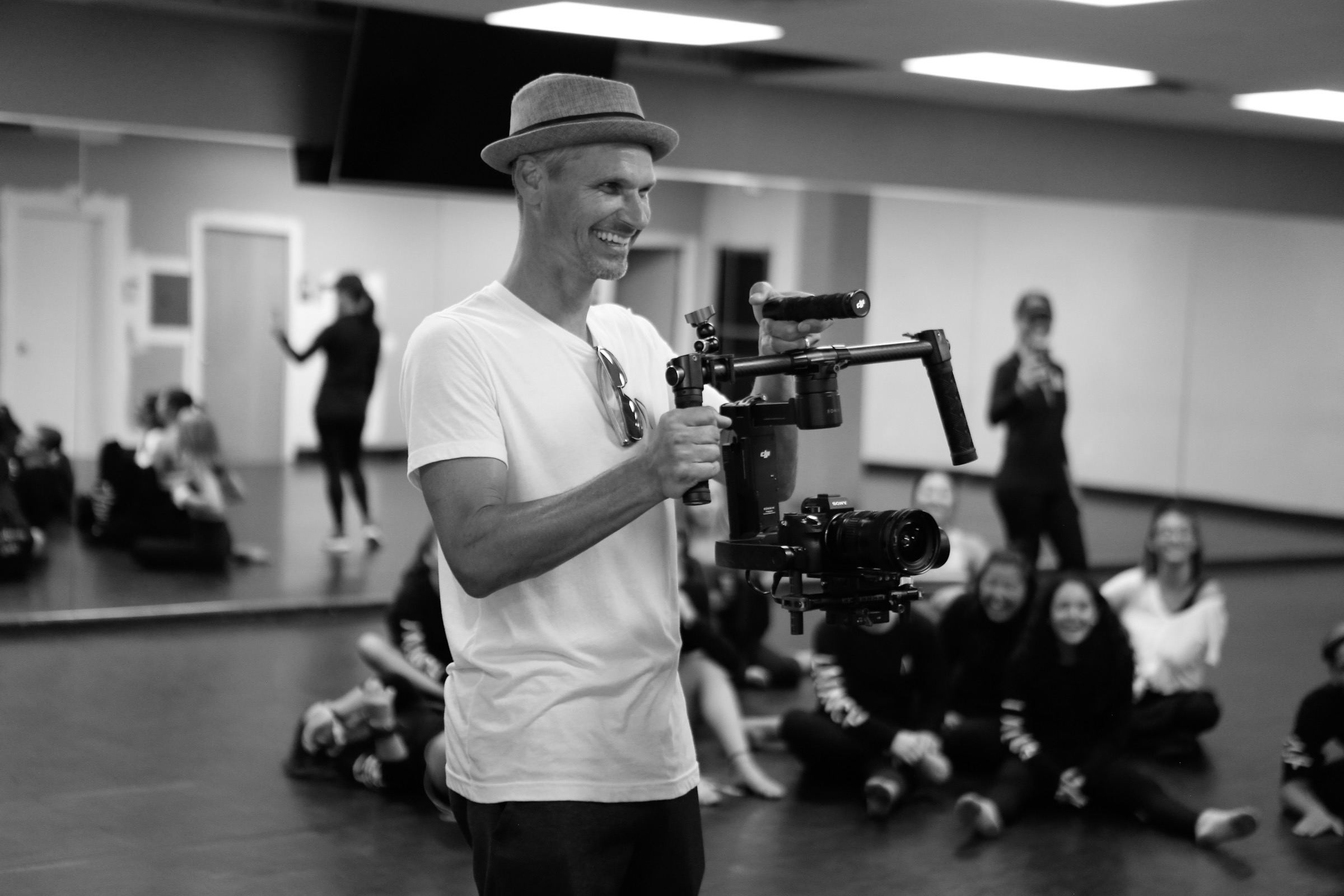
He became a kind of human dolly, moving with athletes and performers while filming action at speeds and angles traditional camera operators couldn’t easily capture.
Skating hadn’t become irrelevant.
It had become a new skill.
That experience eventually became one of the ideas Cory now shares with young artists at The Space:
Don’t define yourself too narrowly.
The skill you’re developing today may become valuable in a way you can’t see yet.
Your first dream doesn’t necessarily disappear when your life changes. Sometimes it becomes the foundation for something you haven’t discovered yet.
“It taught me to never listen when people tell you that you can’t do something,” Cory says. “Trust in your vision and trust in your training.”
Over time, Cory’s career continued evolving.
Professional athlete. Stunt performer. Camera operator. Filmmaker. Photographer. Creative director. Entrepreneur. Mentor.
From the outside, those might look like different careers.
Cory sees them more as extensions of the same curiosity.
That’s also become an important part of the philosophy at The Space.
We don’t want young artists believing their identity is limited to one title.
Being a dancer can teach discipline, collaboration, storytelling, musicality, confidence and the ability to perform under pressure. Those skills can lead to performing—but they can also lead to choreography, directing, filmmaking, producing, teaching, entrepreneurship and creative leadership.
The goal isn’t simply to prepare someone for their next audition.
It’s to help them discover what kind of artist—and person—they might become.
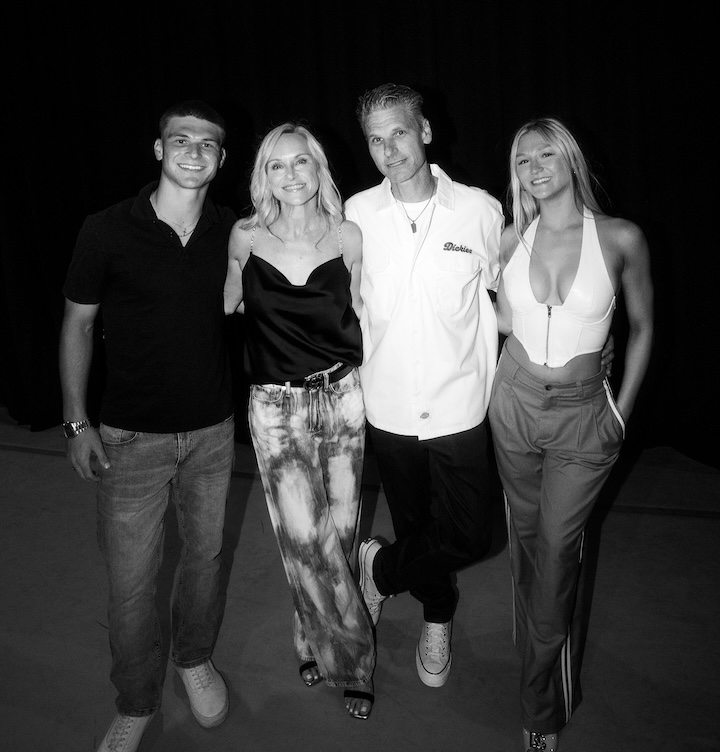
Cory’s journey is also inseparable from his family.
He and his wife, Krista, built their lives while navigating the uncertainty that comes with creative careers, marriage, children and entrepreneurship.
“I learned a lot about selflessness,” Cory says. “The minute you have kids, you want to show them the world, but the responsibility that comes with it is so heavy.”
Fatherhood changed the way he thought about ambition.
The question wasn’t simply, What do I want to accomplish?
It became, What kind of life are we building?
Cory credits Krista with helping balance his naturally adventurous, creative instincts with the responsibility required to build something sustainable.
That balance eventually became part of the DNA of The Space.
One of Cory’s biggest lessons from fatherhood eventually became one of his biggest lessons in mentorship.
“If you tell them what to do, they might listen,” he explains. “But if you show them day in and day out, and you stay consistent with who you are as a person, your kids see that.”
Young people notice consistency.
They notice how adults respond when things don’t go according to plan. They notice how people treat others. They notice whether someone continues creating when nobody is applauding.
Cory brings that philosophy into his work with young artists at The Space, particularly through conversations, mentoring and journaling.
The goal isn’t to tell someone exactly who they should become.
It’s to help create an environment where they can discover it themselves.
Technique matters.
Training matters.
But so do curiosity, resilience, character, creativity, relationships and learning how to navigate uncertainty.
Those things are difficult to measure, but over the course of a creative life, they may matter just as much.
Cory also talks about learning a different definition of patience.
Patience doesn’t mean waiting around for something to happen.
It means continuing to work when the outcome isn’t guaranteed.
That lesson has become increasingly important as Cory mentors young artists who understandably want to know exactly what their careers will look like.
The answer is usually: nobody knows.
And maybe that’s not something to fear.
When asked what he hopes people understand about choosing an unconventional path, Cory’s answer was simple.
“There’s going to be hard times. And the challenges are going to be more than if you go with the flow. But the reward is higher. It’s more fun.”
Then he offered another thought:
“You’re not in a box. You can color outside the box.”
Maybe that’s the larger lesson.
An unconventional life isn’t necessarily about rejecting the traditional path. It’s about being willing to recognize when your own path is taking you somewhere else.
Cory couldn’t have predicted that rollerblading would eventually put a camera in his hands.
He couldn’t have predicted where that camera would take him.
He couldn’t have known that the experiences he was collecting—athletics, filmmaking, entertainment, entrepreneurship, marriage and fatherhood—would eventually shape the environment he and Krista would build for young artists.
Looking backward, the connections seem obvious.
Living through them, they rarely were.
And that’s something worth remembering for anyone trying to figure out what comes next.
You don’t have to know exactly where the road is going.
And don’t be afraid when the path looks different from the one you imagined.
Sometimes the thing that looks like a detour becomes the path.

Cory M. Miller is a creative director, filmmaker, entrepreneur and former professional skater based in Southern California. He is the co-founder of The Brea Space and creator of The Space TV, where he works alongside his wife, Krista Miller, developing and mentoring the next generation of artists.
His career has moved through professional action sports, Hollywood stunt work, filmmaking, photography and creative direction—experiences that now inform his approach to mentorship and artist development.
Cory co-hosts Inside the Space with the Millers with Krista, where they explore creativity, family, careers, personal growth and the realities behind building a life in the entertainment industry.
